
Tile Sheds Water. Grout Delivers It.
The tile surface will be dry within the hour, and that proves nothing. The grout lines run straight to the subfloor, and they were open the whole time.
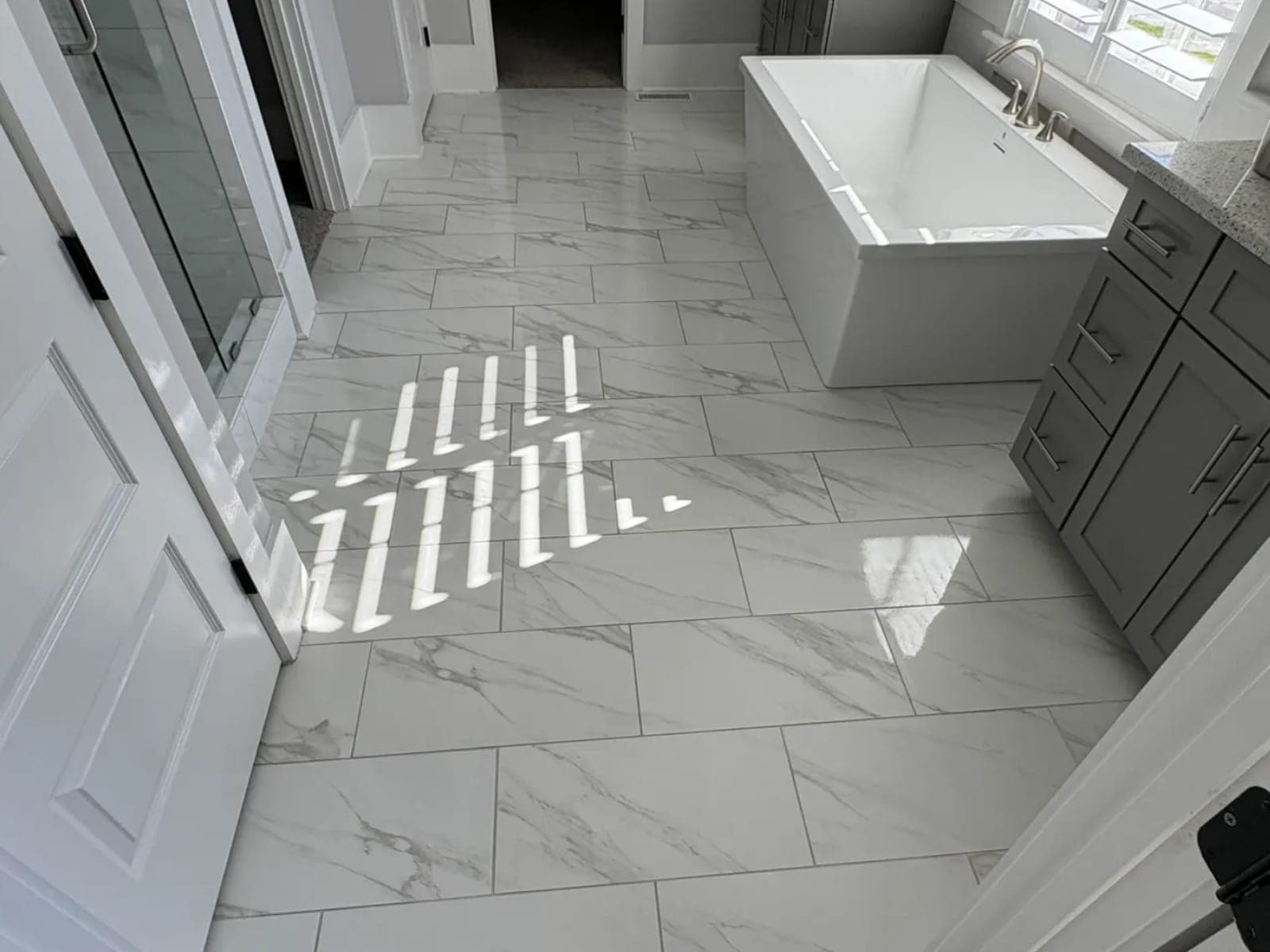
A dry tile surface proves almost nothing
Mopping a flooded tile floor takes ten minutes, the room looks resolved, and everyone moves on. That is the whole trap. Glazed tile is close to waterproof, so the surface was never in danger; a fan pointed at tile is drying the one part of the assembly that did not need help. Grout is different. It is porous cement, and it is connected to everything below: the thinset, the backer, the subfloor, and at the room's edge, the bottoms of the walls. Every minute the water stood, the grout lines were making deliveries, and those deliveries continue to matter long after the mop bucket is put away.
Grout is the plumbing you didn't order
The physics splits cleanly at the grout line. Tile is fired and glazed and sheds water; grout is cementitious and capillary and drinks it. Standing water on a tiled floor is a reservoir being steadily metered into every grout line it covers, for as long as it stands. The floor's area works against you here: a big tiled kitchen has hundreds of linear feet of grout, and all of it is intake.
Where it goes from there is the part nobody sees. Water moves through the grout into the thinset bed and the backer or subfloor under it, then spreads laterally through those layers well past the room you mopped. At the perimeter it finds the wall bottom plates and wicks upward, which is how a kitchen overflow turns into damp drywall two feet up in the room next door. The doorway carpet catching moisture at its edge is often the first visible clue, and it is a late one.
Then there is the timeline mismatch, which is the cruelest part. The tile surface is dry in an hour. The layers underneath dry slower than almost any assembly in the house, precisely because the tile above them blocks evaporation the same way it shed the water. Left alone, a subfloor under tile holds moisture for weeks, quietly, under a floor that looks and feels perfect.
Drying what the grout lines delivered
Speed matters most while the reservoir still exists, so extraction comes first: standing water off the tile the same day, before the grout lines take any more of it. Then the meters come out, and the crew maps where the water actually went, across the subfloor, into adjacent rooms, and up the base of the walls. The drying setup follows the map, air movement and dehumidification aimed at the wet layers below and beside the tile, and most rooms come back to verified dry in one to three days.
Scope, stated plainly: the tile itself almost always comes through fine, and the finish runs in a set order, dry first and confirmed by meter, then the tile and grout get cleaned, then the sanitizing pass goes over the stretch the water covered and nothing wider. What we do not do is regrouting, tile replacement, or wall repair, and if the meter says the subfloor under the tile has gone soft, that is a flooring contractor's problem, named on site, with the fixed price covering our portion only.
We walk through the full extract-dry-clean-sanitize sequence on our how water extraction works page, and every job is backed by our 100% satisfaction guarantee.
Frequently asked questions
The tile was dry an hour after the flood. Do I actually need anyone?
That comes down to how long the water stood, which is a question about the grout, never the tile. A brief spill mopped fast is usually the end of the story. Water that stood for an hour or more was feeding the grout lines the whole time, and a same-day pass with the moisture meter over the subfloor and walls settles it with numbers instead of hope.
Will the water ruin the tile itself?
Almost never; glazed tile is one of the most water-tolerant surfaces in the house. The concern is the assembly below it. If moisture sits in the thinset and subfloor long enough, tiles can eventually sound hollow or come loose, and at that point the fix is a flooring contractor's, because setting tile is a trade we do not practice.
Do you regrout or replace damaged tiles?
No. Our trade is extraction, drying, cleaning, and sanitizing, and on tile jobs it ends with clean, sanitized tile and grout over a subfloor that meters dry. Regrouting, tile setting, and any repair work belong to a flooring contractor, and if the job needs one, you will hear that before we quote anything.
Related water problems we handle
Wet subfloor
The deck under every floor covering, dried from above when extraction starts early, with a straight answer when a section is past saving.
Hard FloorsVinyl plank
Vinyl plank makes a lid over trapped water; we find the wet subfloor a perfect-looking surface is hiding and give it a way out.
Where the Water Came FromTub & sink overflows
Clean tap water, delivered through the floor into the rooms below. We dry the floors you flooded and are plain about what the ceiling needs.
Every hour it sits, it soaks deeper
Enter your zip code to reach your local Safe-Dry® team. Water extraction and drying for floors and carpet across 532 locations in 6 states, with same-day response in most areas.