
Wet Hardwood Moves. Catch It Before It Commits.
Cupping, crowning, buckling: three stages of the same story. Early extraction and a controlled dry-down can still change how the first one ends.
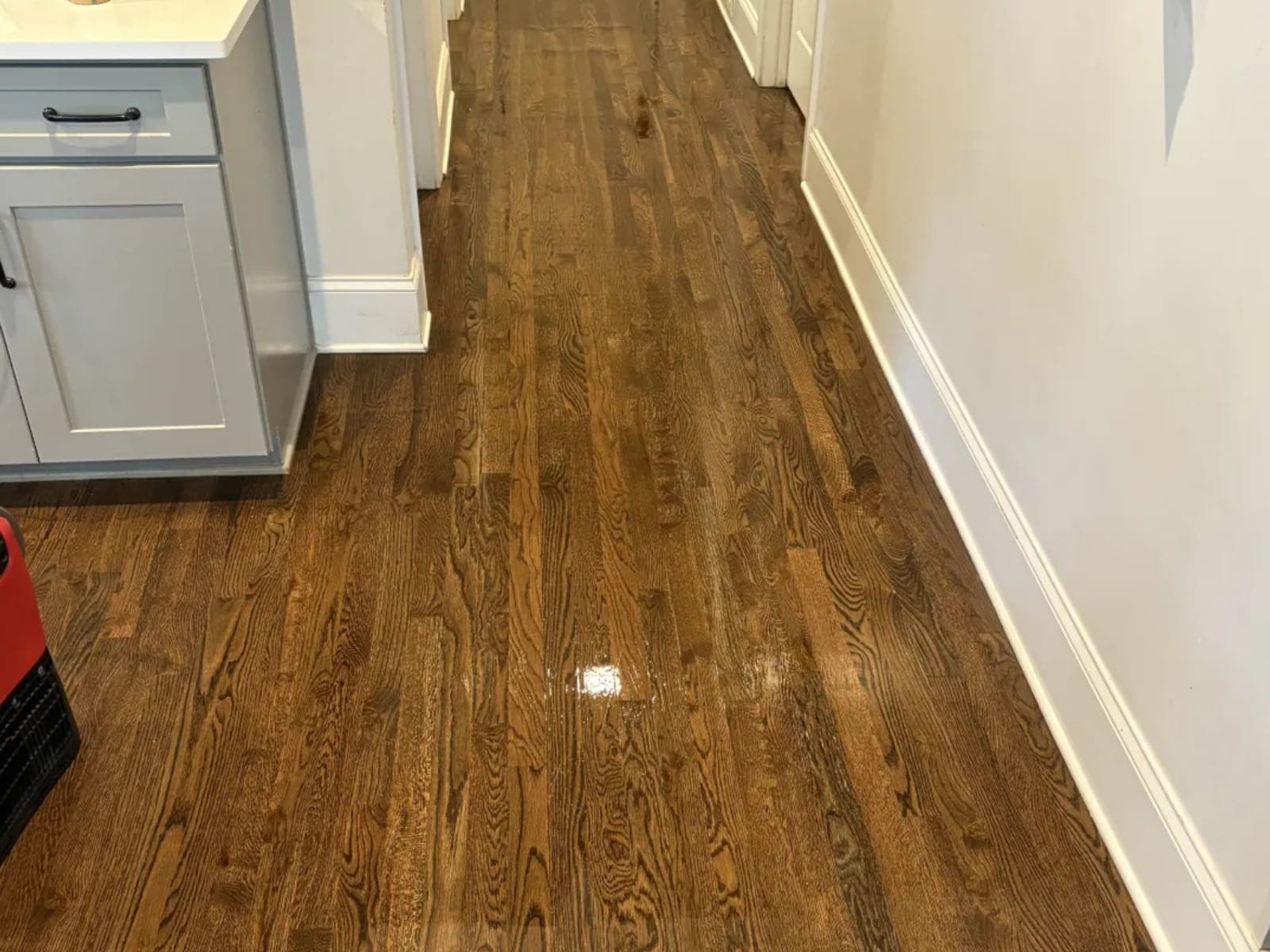
Wood floor water damage is a moving target. The damage at hour two and the damage at day three are different problems with different outcomes, and the difference is mostly a question of when the drying starts. This page covers what water actually does inside hardwood, which of it a fast dry-down can still undo, and where the honest limits sit.
Why a box fan cannot un-cup a floor
The reflex is towels on the surface and a fan aimed low, and on hardwood that combination can actively make things worse. A cupped board is wet on the bottom and drier on top; that imbalance is the whole reason the edges lifted. Drying the top face harder does nothing for the water underneath, it just steepens the difference between the two faces. Add a space heater and you can dry the surface fast enough to stress the finish while the core of the board is still swollen, which is how a floor that might have settled ends up crowned instead.
The other trap is patience of the wrong kind. Hardwood swells slowly, so the floor on day one often looks close to normal, and the temptation is to wait and see. Wood does its moving over days, and while you watch the boards, the water is soaking into the subfloor beneath them, where no towel has ever reached. By the time the cupping is obvious enough to alarm you, the moisture has usually been feeding the bottoms of the boards the entire time.
Mild cupping caught early can settle as the moisture equalizes. A buckled board has already made its decision.
What wood does when it drinks
Cupping is the first move, and it tells you where the water is. Moisture reaches the bottoms of the boards, through the seams or up from a wet subfloor, and the underside swells before the top does. The edges of each board rise, the center stays low, and the floor takes on a washboard feel. Cupping is a symptom of imbalance: wet below, drier above. That matters, because an imbalance can still be equalized.
Crowning is cupping's aftermath, and it is usually man-made. Dry the top of a cupped floor aggressively while the core is still wet, or sand a cupped floor flat before it has finished equalizing, and the board centers rise as the remaining moisture leaves. Where cupping can relax, crowning tends to be a finished decision, which is why the fast-and-hot approach to drying hardwood costs floors.
Buckling is the endgame. When boards take on enough water, the swelling generates more force than the fasteners or glue can hold, and whole sections lift off the subfloor, sometimes with an audible pop. A buckled board has left its home and does not go back. The same is true of the wide gaps that show up after a hard swelling-and-shrinking cycle: the wood has moved, and no dry-down reverses it.
A dry-down that gives the boards a chance to settle
Extraction first, and on hardwood it is a perimeter-and-seams job. Standing water on the surface is still feeding the board bottoms through every seam it covers, so it comes off fast, and then the crew maps the floor with moisture meters to find how far the water traveled past the visibly wet area. On hardwood the wet zone you can measure is routinely twice the wet zone you can see.
Then the part that gives cupped boards their chance: a controlled dry-down that works both faces of the board toward the same number. Air movement keeps the surface releasing moisture, dehumidification keeps the room air able to accept it, and the subfloor below dries along with the boards above. Mild cupping caught early often settles as the moisture equalizes, and the floor is called dry when it meters like the unaffected boards two rooms away, never when it merely feels fine. Two days of equipment is typical for hardwood; stubborn rooms earn a third.
And the honest close-out. Buckled boards, popped fasteners, and open gaps are past what drying can fix; they need a flooring contractor, because board replacement and refinishing are outside what we do. What you get from us is the full extraction, a verified dry-down, the floor cleaned and its wet footprint sanitized once the meters agree, and a plain accounting of which boards made it.
We walk through the full extract-dry-clean-sanitize sequence on our how water extraction works page, and every job is backed by our 100% satisfaction guarantee.
What to do before the crew arrives
The first minutes belong to you, and they matter. Here is the honest version of what actually helps, and the point where waiting for equipment beats improvising.
- 1
Stop the source and get the surface water off
Shut the supply valve or the main, then get after the standing water: squeegee it toward one spot, soak it up with towels, run a wet-dry vac over it if you own one. Every minute water sits on hardwood, the seams are drinking, so surface removal here is worth more than on almost any other floor.
- 2
Clear the floor of anything that holds moisture against it
Rugs, mats, plants, and furniture with wood or metal legs all come off the wet area. A rug on wet hardwood traps moisture against the finish, and furniture legs leave stains that survive the dry-down.
- 3
Resist the space heater
Fast surface heat dries the top of the boards while the bottoms stay wet, which pushes a cupped floor toward crowning. Leave the room at normal temperature, keep air moving gently if you like, and make the call.
Frequently asked questions
My floor is cupped. Can you flatten it?
Sometimes, and the honest answer depends on timing. Mild cupping that gets a fast extraction and a controlled dry-down often settles on its own as the moisture in the boards equalizes. Deep cupping, crowning, and buckling do not reverse. Meter readings come out on the first pass through the house, and the straight assessment of which category your floor is in arrives before a single machine is unloaded.
Do you replace boards or refinish floors?
No. Getting water out of floors is the whole business: extraction, drying, cleaning, sanitizing. Boards that buckled or gapped need a flooring contractor, and refinishing is its own trade. What we will do is dry everything that can be saved and mark exactly where the flooring work starts, so you are not paying to dry boards that are already gone.
How long does wet hardwood take to dry?
Longer than almost anything else in the house, because the boards release moisture reluctantly; plan on the equipment running the better part of three days. The finish line is a meter reading that matches your unaffected boards, not a day count and not how the floor feels underfoot.
What will this cost?
One number, quoted at the walkthrough, good for the whole job. Hardwood pricing follows the meter map: how many boards took water, whether the subfloor drank, how much equipment the room needs. Because the number comes from readings and not a guess, it does not grow after the machines arrive.
Related water problems we handle
Wet subfloor
The deck under every floor covering, dried from above when extraction starts early, with a straight answer when a section is past saving.
Hard FloorsLaminate floors
Swollen laminate does not come back, so this page is about speed, stopping the spread, and a straight answer on what is already gone.
Extraction & DryingWater extraction
Standing water out the same day, because the difference between hours and days is the difference between drying and replacing.
Every hour it sits, it soaks deeper
Enter your zip code to reach your local Safe-Dry® team. Water extraction and drying for floors and carpet across 532 locations in 6 states, with same-day response in most areas.