
Laminate and Water: The Honest Page
Laminate's core is compressed fiberboard, and fiberboard makes its swelling decisions permanently. Here is what speed can still save.
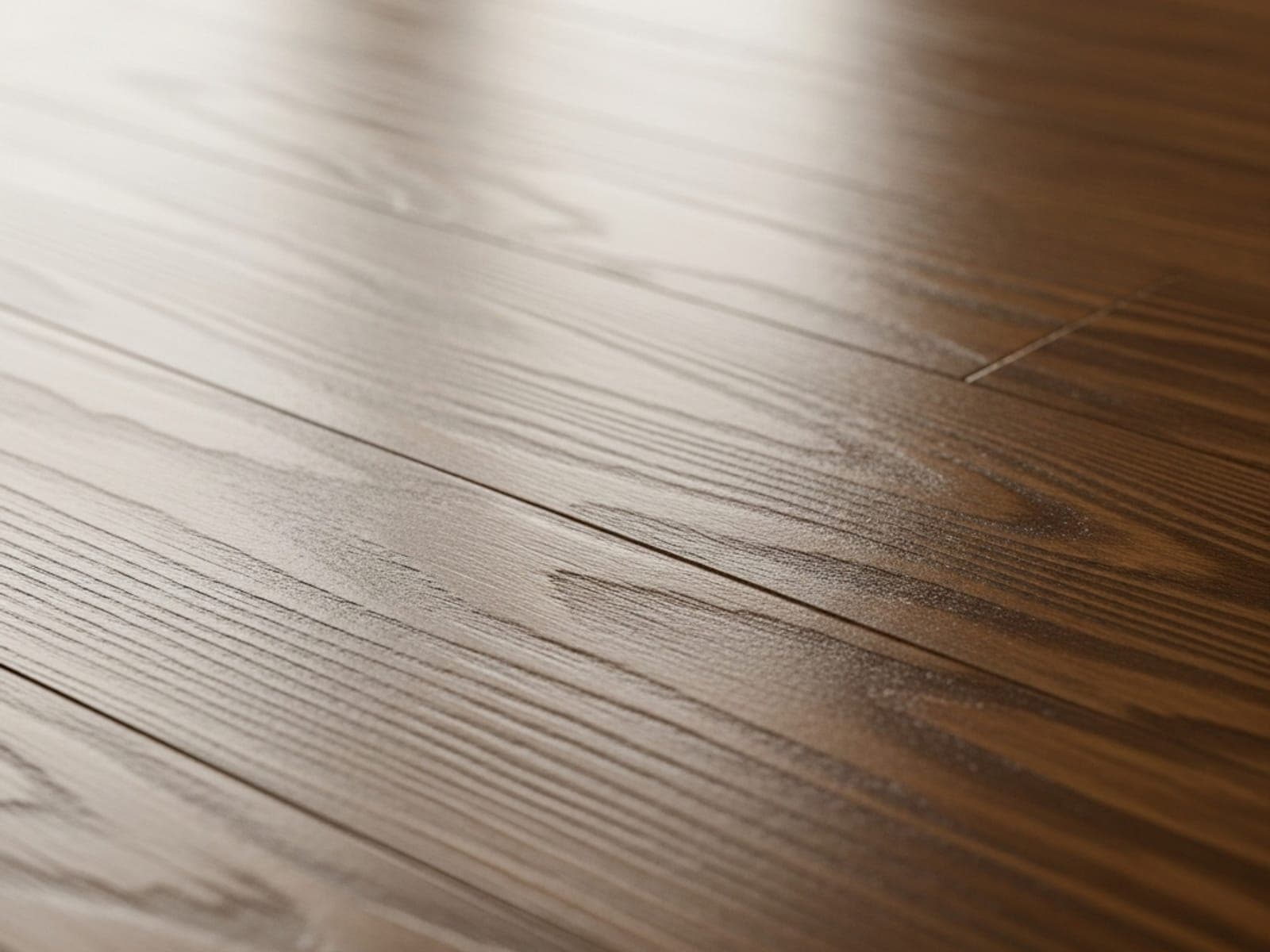
The hair dryer and the swollen edge
Fans, towels, and the occasional hair dryer feel productive on laminate because the surface cooperates instantly: the wear layer is plastic, and it wipes bone dry in seconds. That is exactly the trap. The water that matters already went through the seams to the fiberboard core, and no amount of airflow on the surface un-swells a fiber that has expanded. Worse, while you dry the face of the floor, the water underneath is traveling along the underlayment into rooms that were fine an hour ago. Drying the top of a laminate floor while ignoring what is under it is polishing the lid of the problem.
Fiberboard in a raincoat
A laminate plank is a photograph of wood glued to a core of compressed fiberboard, with a hard plastic wear layer on top. The face sheds water all day. The seams and the raw fiberboard edges inside them are the way in, and once standing water has had a few minutes on the floor, some of it has found a seam. What happens next is decided by the core, and the core is essentially very dense cardboard.
The swelling is mechanical and it is one-way. Compressed wood fiber takes on water, expands, and breaks the resin bonds that held it flat; those bonds do not re-form when the water leaves. A swollen edge dries hard in its new shape, which is why laminate that got wet shows peaked seams and raised corners forever afterward, no matter how thoroughly it was dried. This is the fact the rest of this page is built around, and there is no equipment on our trucks or anyone else's that changes it.
Meanwhile the water that got past the planks spreads with almost no resistance. Laminate floats on an underlayment, and that thin gap is a highway: water crosses it laterally, wetting the underside of boards far from the spill and soaking into the subfloor the whole way. The wet zone under a laminate floor is reliably bigger than the wet zone on top of it, and it grows by the hour.
What we can still win for a laminate floor
The job on laminate is a race with a clear finish line: reach the water before it reaches more seams. Same-day extraction pulls standing water off the surface and out of the seams and perimeter it was feeding, and that is what stops the spread into the next room. Then the dry-down goes after what is underneath, air movement and dehumidification working the room and the subfloor below the planks, one to three days for most rooms.
The second half of the job is the assessment, done with a moisture meter and delivered straight. Boards whose cores already swelled are gone, and we will show you which ones and why instead of drying past them. Replacing laminate is flooring work and we do not do it, but a dry, sanitized subfloor is exactly what the replacement floor needs to land on, and an honest map of the damage is what keeps you from replacing more than you have to.
We walk through the full extract-dry-clean-sanitize sequence on our how water extraction works page, and every job is backed by our 100% satisfaction guarantee.
Frequently asked questions
Can swollen laminate be dried back flat?
No, and anyone who says otherwise is selling something. The core is compressed fiberboard, and swelling breaks the bonds that held it compressed. Once an edge has peaked or a corner has lifted, it holds that shape dry. What drying protects is everything the water had not reached yet, which is usually most of the floor if the call happens fast.
The floor looks fine right now. Did I get away with it?
Possibly, and it is worth confirming instead of hoping. Swelling shows up over days as the core absorbs, so a floor can look perfect tonight and show peaked seams by the weekend. A same-day meter check tells you whether water got past the seams, while there is still time for extraction to matter.
Do you replace the ruined boards?
No. Nothing on our trucks installs flooring; replacement is a flooring contractor's job. Our end is the water: the spread stopped, the subfloor dried and sanitized, and every surviving board accounted for, so the flooring quote you get afterward covers only what actually needs to go.
Some boards are obviously already ruined. Is it still worth calling?
Yes, and this is the case where speed pays the most. The swollen boards are lost, but the water under them is still moving toward boards that are not, and the subfloor underneath everything is still soaking. Extraction and a real dry-down cap the damage where it stands and leave a dry deck for whatever floor comes next.
Related water problems we handle
Wet subfloor
The deck under every floor covering, dried from above when extraction starts early, with a straight answer when a section is past saving.
Hard FloorsHardwood floors
Cupped boards can still settle if the dry-down starts early enough; we extract, equalize, and say plainly which boards won't come back.
Where the Water Came FromDishwasher leaks
Kitchen leaks travel under cabinets and toe-kicks, so the visible puddle is the overflow of a hidden pool. We find the rest and dry it.
Every hour it sits, it soaks deeper
Enter your zip code to reach your local Safe-Dry® team. Water extraction and drying for floors and carpet across 532 locations in 6 states, with same-day response in most areas.