
The Puddle You See Is the Overflow of the One You Don't
Dishwasher water travels under things: the toe-kick, the cabinet bases, the machine's own footprint. We dry the floor. Swollen cabinet boxes are carpentry, and this page says so.
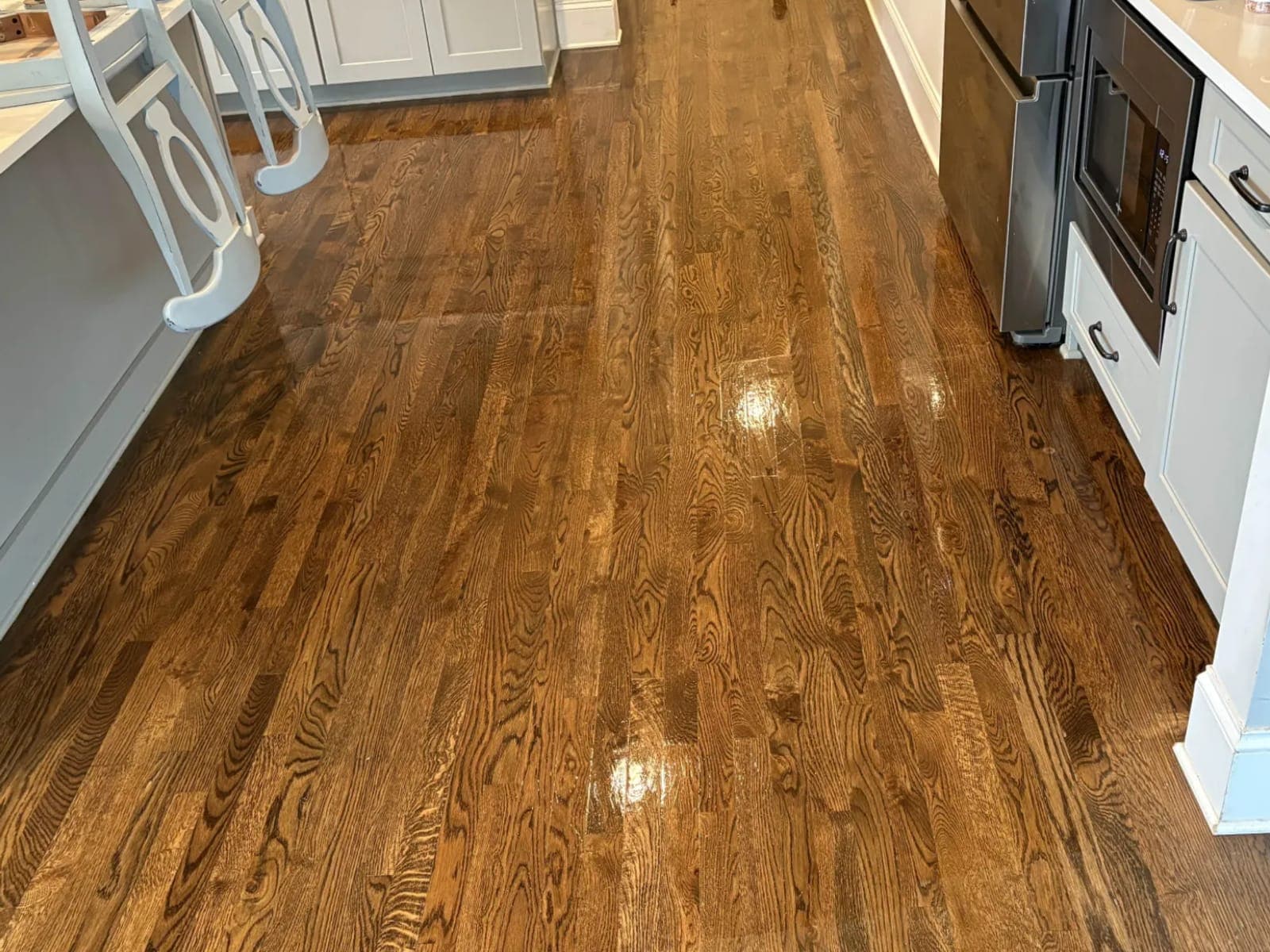
Mopping the visible half
The towel test passes and the kitchen fails anyway. What reaches the open floor in front of a leaking dishwasher is the overflow, the portion that ran out after the space under the machine and under the neighboring cabinets had already filled. A towel and a wet-vac can only work the floor they can touch, and the wettest floor in the kitchen is under sixty pounds of appliance and behind a row of toe-kicks. That zone has no airflow, no light, and no evaporation to speak of, so while the walkway dries in an afternoon and everyone relaxes, the hidden pool sits on the subfloor for weeks, swelling everything it touches from below.
Kitchens hide water under everything
Dishwasher leaks start at floor level, out of sight. A failed door gasket, a loose supply connection, or a split drain hose releases water into the machine's own footprint, and from there it obeys flatness: it spreads along the subfloor under the adjacent cabinet bases and toe-kicks long before any of it emerges into the room. By the time a puddle appears at the toe-kick line, the under-cabinet zone upstream of it is already wet.
That zone is the slowest-drying square footage in the house. Enclosed on five sides, it holds moisture against the subfloor indefinitely, and the materials down there are the ones least able to take it. MDF toe-kicks and particleboard cabinet bottoms wick standing water like blotter paper, and the cut edges of laminate or vinyl plank flooring, hidden under the cabinet overhang, drink from the pool at exactly the seam where they are least protected.
Swelling is the part that does not reverse. A toe-kick that has bloomed and a cabinet floor that has puffed and delaminated will not shrink back when they dry; flooring seams that peaked under the cabinets stay peaked. The visible puddle evaporating tells you nothing about any of this, which is why a dishwasher leak gets judged with a moisture meter and never with eyes alone.
We dry the floor. The cabinets get a carpenter.
The work starts past the edge of the visible water. We meter the open floor, the toe-kick line, and the cabinet run on both sides of the machine to find the true boundary of the wet, then extract what can be reached and put directed airflow into the toe-kick spaces and under the machine, with dehumidification pulling the moisture out of the air as it surrenders. Most kitchen floors come off the equipment within a couple of days, the enclosed toe-kick zones holding out longest, and the meters, checked against dry flooring across the room, make that call.
Our part of the kitchen runs in order: extract, dry to verified numbers, then clean the flooring, with sanitizer applied where the leak had been and no further. A cabinet box or toe-kick that swelled is carpentry, flooring planks that peaked past recovery are a flooring installer's job, and the dishwasher itself belongs to an appliance tech. The first visit ends with two lists: a fixed number for the drying, and a plain accounting of what is past it, so the tradespeople you do hire are fixing a dry kitchen instead of a wet one.
We walk through the full extract-dry-clean-sanitize sequence on our how water extraction works page, and every job is backed by our 100% satisfaction guarantee.
What to do before the crew arrives
The first minutes belong to you, and they matter. Here is the honest version of what actually helps, and the point where waiting for equipment beats improvising.
- 1
Close the dishwasher's supply valve
It is usually under the kitchen sink, on the line branching to the dishwasher. If you cannot find it or it will not turn, the house main works too. A leak that keeps feeding is a pool that keeps growing.
- 2
Pull the toe-kick if it comes off easily
Many toe-kick panels are held by clips or a couple of screws. Removing one opens the hidden zone to air and lets you see whether water is standing under the cabinets. If it fights you, leave it; the point is airflow, not demolition.
- 3
Empty the nearby cabinet floors
Clear the sink base and the cabinets flanking the dishwasher. Cardboard and cleaning supplies wick water upward and hold it against the cabinet bottom, and clearing them shows you whether the leak reached the inside.
Frequently asked questions
Can you fix my swollen toe-kicks or cabinet bases?
No, and better you read it here than hear it at your kitchen counter. Swollen MDF and particleboard do not come back, and rebuilding them is carpentry, a trade we leave to carpenters. What we do is stop the swelling from spreading by getting the floor dry fast, and hand you an honest roster of which pieces are past saving.
The kitchen floor looks dry. How would I know if water is still under the cabinets?
You mostly would not, which is the problem. The signs that eventually show, a musty smell at the toe-kicks, seams lifting at the cabinet line, a toe-kick going soft, arrive weeks after the leak. A moisture meter reads through the flooring at the cabinet edge in seconds, and that check is part of every estimate we run.
The dishwasher had apparently been dripping for months. Is drying still the answer?
Sometimes not, and you deserve the straight version: a slow leak measured in months has often produced damage drying cannot undo, and anything growing under there in that time is a job for a licensed remediation crew, a separate trade. We will meter it, spell out what drying can still accomplish, and name the right contractor for the rest.
What does dishwasher leak cleanup cost?
One number, set in person, once the meter has traced how far under the cabinetry the water went; kitchens do not get priced over the phone because the expensive part is the part nobody can see. Same-day response is the standard, and on under-cabinet water the early start matters, because that zone gets no help from evaporation.
Related water problems we handle
Vinyl plank
Vinyl plank makes a lid over trapped water; we find the wet subfloor a perfect-looking surface is hiding and give it a way out.
Hard FloorsTile floors
The tile survives the water; the grout lines hand it to the subfloor, and that hidden delivery is the part we find and dry.
Hard FloorsWet subfloor
The deck under every floor covering, dried from above when extraction starts early, with a straight answer when a section is past saving.
Every hour it sits, it soaks deeper
Enter your zip code to reach your local Safe-Dry® team. Water extraction and drying for floors and carpet across 532 locations in 6 states, with same-day response in most areas.