
Water Under Vinyl Plank Does Not Leave On Its Own
LVP survives water. That is the problem: it makes a lid, and whatever got underneath sits in the dark with nowhere to go.
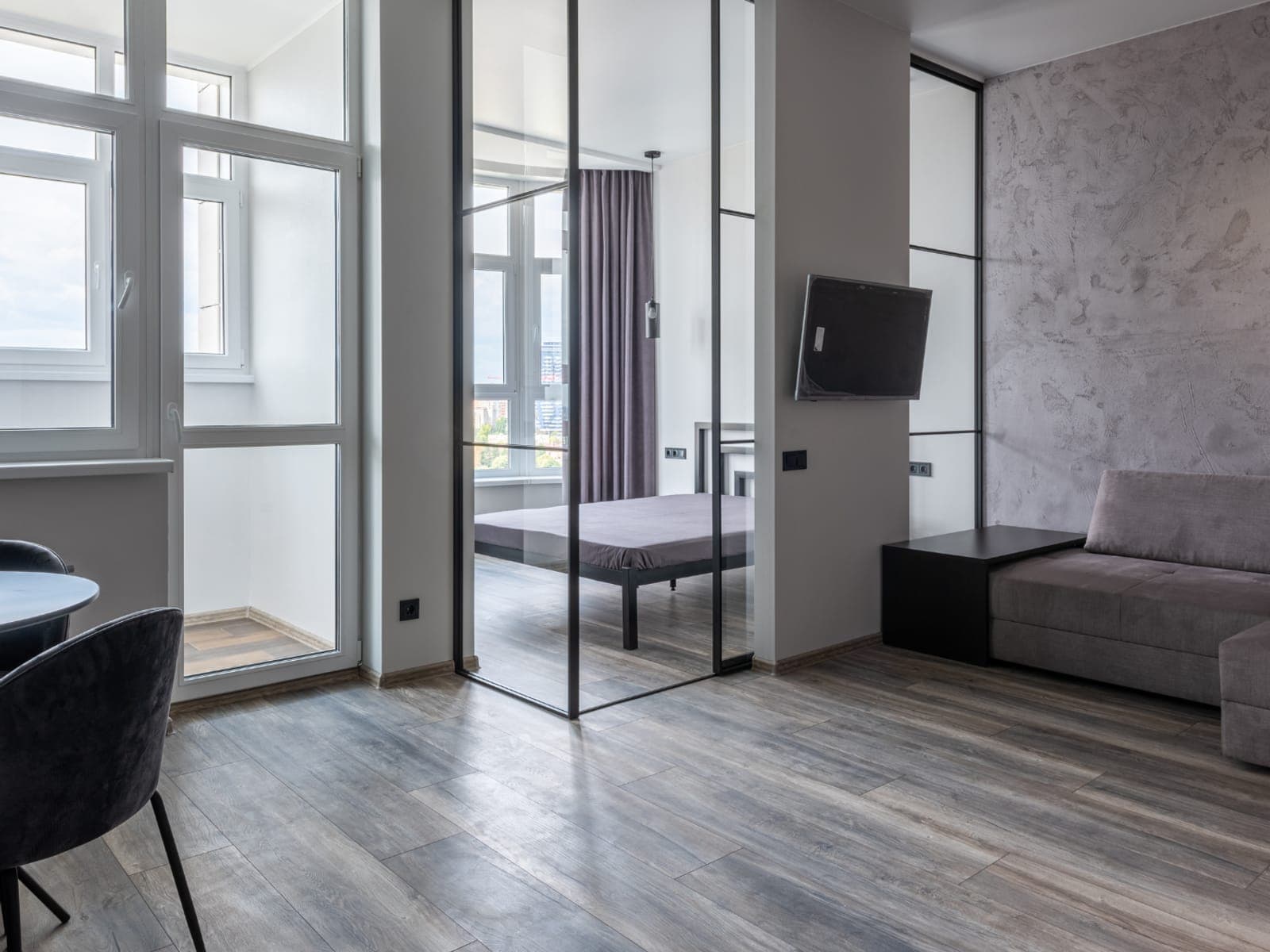
Mopping the top of a sealed lid
Cleaning up a spill on vinyl plank takes five minutes and a couple of towels, and the floor looks like nothing ever happened. The catch is that the water you wiped up was the fraction that never posed a threat. LVP's wear layer is genuinely waterproof, so the surface was always going to be fine. The question was never the surface; it was how much went through the seams, under the baseboards, or beneath the cabinet toe-kicks while the water stood, because that portion is now under a floor that towels cannot reach.
Fans are the natural next move and they accomplish close to nothing here. A floating vinyl floor is, functionally, a vapor barrier laid across the whole room, and airflow above it never touches the space below it. So the homeowner runs fans for a day, declares victory over a floor that was already dry, and the subfloor stays wet for weeks under the lid. The usual announcement comes later: a musty smell with no visible source, in a room where every surface reads clean and dry.
A puddle on the counter is gone by morning. The same puddle under vinyl plank is still there next season.
Waterproof floor, wet subfloor
Water gets under vinyl plank at the edges of its armor. Standing water works into seams, especially where the locking joints have flexed underfoot over the years, and it slips under the perimeter gap the floor needs for expansion, hidden behind the baseboards. In kitchens and laundry rooms it ducks under toe-kicks and appliances. Once below, it travels the thin gap between plank and subfloor with nothing to slow it down, so the wet footprint underneath is regularly several times the size of the spill that caused it.
Then it stays. Above it sits a waterproof plank; below it sits a subfloor that absorbs. The evaporation path is nearly zero, so the normal physics of drying never gets a chance to operate. A puddle on the counter is gone by morning. The same puddle under vinyl plank is still there next season, slowly working on the plywood or OSB underneath, in the dark, at room temperature, which is about the best growth environment anyone could design.
Finding the water the floor is hiding
The job starts with detection, because you cannot dry what you have not found. The crew meters the floor and its perimeter, reads the subfloor from adjacent rooms and along transitions, and maps the actual edges of the trapped water. On vinyl plank this map is the whole ballgame: the surface offers no clues, so the meter does all the talking.
Then the water comes out. Extraction pulls what is reachable at edges, transitions, and lifted perimeter trim, and directed air movement plus dehumidification dries the subfloor beneath. Sometimes the honest route is lifting planks to dry what is under them, and click-lock LVP tolerates careful, ordered lifting better than almost any other floor. Once the water has an exit, most rooms need a day or three of equipment.
Scope stays on the table from the first conversation. If the dry-down needs rows of planks lifted and relaid, that goes in the plan before anything starts, and if the lifting crosses into genuine flooring work, you hear that up front too, with one fixed number attached before the equipment comes in. The finish follows the meters: subfloor verified dry, then the floor gets cleaned, then the sanitizing step covers only the area the water reached, and the lid goes back to being a feature.
We walk through the full extract-dry-clean-sanitize sequence on our how water extraction works page, and every job is backed by our 100% satisfaction guarantee.
What to do before the crew arrives
The first minutes belong to you, and they matter. Here is the honest version of what actually helps, and the point where waiting for equipment beats improvising.
- 1
Stop the source and clear the surface fast
The less time water stands on the seams and perimeter, the less of it ends up underneath. Towels first, then any vacuum rated for water, on everything you can see. On this floor that effort genuinely pays, more than on almost any surface, because the surface is where the intake happens.
- 2
Check the edges of the room
Look along the baseboards and at any transition strips for dampness, and note where and when you find it. Water at the perimeter means water underneath, and your notes tell the crew where to start metering.
- 3
Do not start prying up planks
Click-lock floors come apart in order, row by row from a wall. Prying a plank out of the middle of the floor breaks the locking edges and turns a drying problem into a flooring problem. Leave the floor assembled and let the meter map decide which rows lift, if any.
Frequently asked questions
The floor looks completely fine. How would I even know there is water under it?
You would not, by looking, and that is the defining feature of this problem. If water stood on the floor, ran under an appliance, or came through a wall nearby, the only real answer is a moisture reading. A same-day meter check either clears the floor or catches trapped water while extraction still changes the outcome.
Will you have to take my floor apart?
Sometimes, partially, and you will know before it happens. Plenty of trapped water can be extracted and dried from the edges and transitions. When the map says rows of planks need to come up to dry the subfloor properly, the drying plan says so up front, and if the work crosses into flooring territory, we tell you that instead of quietly becoming a floor installer.
Can water trapped under LVP really cause mold?
It is one of the more reliable ways to get there: a wet, dark, undisturbed gap that never dries is a growth recipe. A fast dry-down is exactly how that outcome gets prevented. If growth is already established under the floor, that is remediation work for a licensed mold firm, and we name it out loud instead of drying around it.
Related water problems we handle
Wet subfloor
The deck under every floor covering, dried from above when extraction starts early, with a straight answer when a section is past saving.
Hard FloorsTile floors
The tile survives the water; the grout lines hand it to the subfloor, and that hidden delivery is the part we find and dry.
Extraction & DryingWater extraction
Standing water out the same day, because the difference between hours and days is the difference between drying and replacing.
Every hour it sits, it soaks deeper
Enter your zip code to reach your local Safe-Dry® team. Water extraction and drying for floors and carpet across 532 locations in 6 states, with same-day response in most areas.