
A Tub Overflow Is a Two-Floor Problem
The water is clean tap water. The delivery method is the trouble: gravity takes it through the floor assembly into the ceiling below. We dry the floors above and are straight with you about the rest.
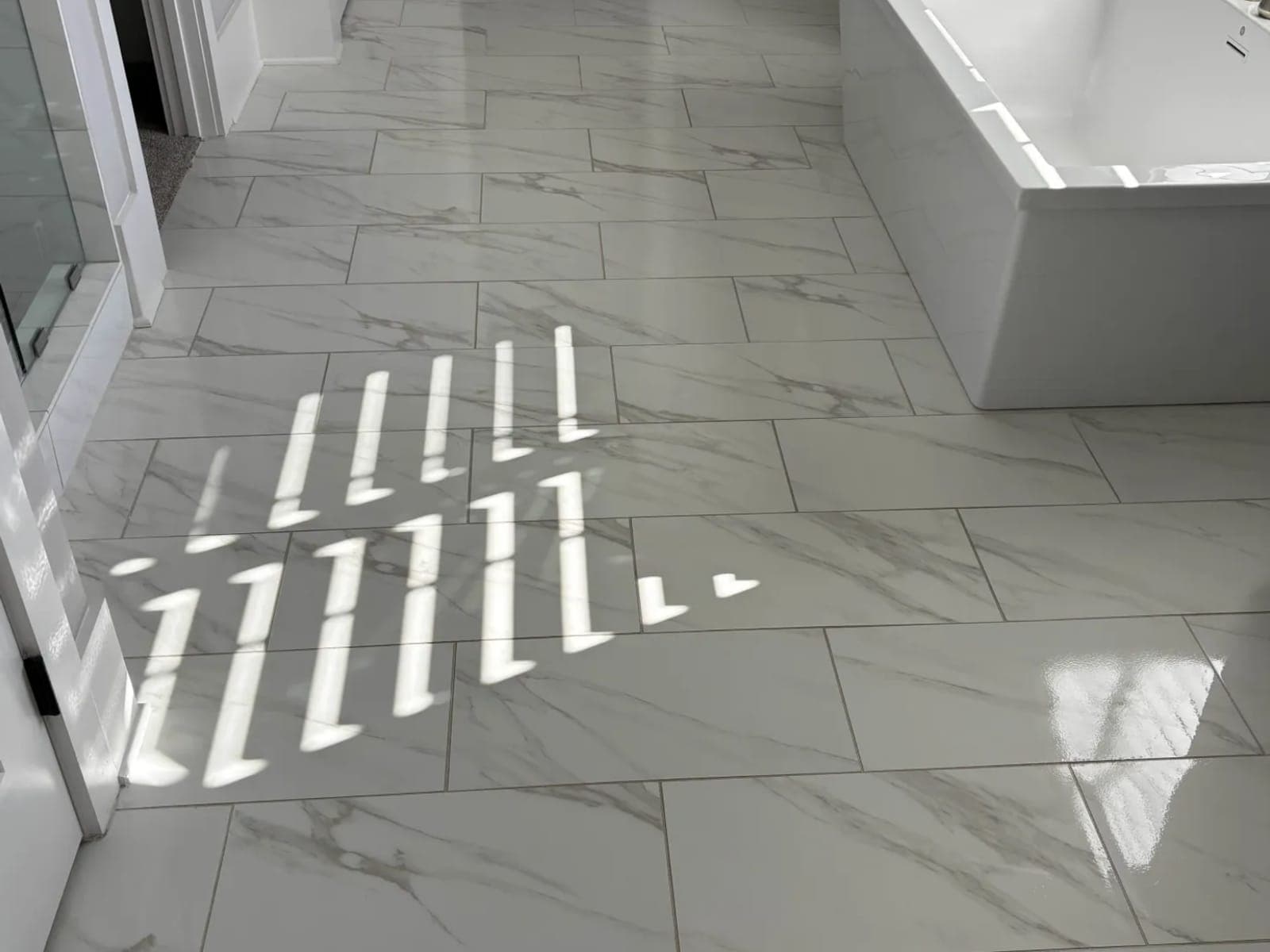
Upstairs towels, downstairs problem
Toweling the bathroom floor handles the layer sitting on the tile or vinyl, and that layer was never the real threat. A bathroom floor is full of openings: the gap at the tub's own edge, the penetrations where supply and drain lines pass through, the seam under the baseboard, the cut around a floor vent. An overflow finds every one of them in minutes, and once water is through, it is inside the floor assembly, where towels have no jurisdiction. You can leave the bathroom itself gleaming and bone dry and still have a joist bay underneath holding water.
The other mistake is watching the ceiling stain downstairs and waiting to see if it grows. The space between floors has no airflow at all, so trapped water there dries on a timescale of weeks, and everything in the bay, framing, insulation, the drywall below, soaks for the duration. Waiting does not let the problem resolve. It gives the problem privacy.
Where a running faucet sends its water
Follow the water. A tub left filling walks over its rim, crosses the floor, and drains through whichever penetration it meets first. From there gravity runs the show: down the outside of the drain lines, along the top of the subfloor to its low spot, then through the subfloor seams into the joist bay, where it collects on the back of the downstairs ceiling. The stain that appears on that ceiling is an overflow indicator for the bay, the visible edge of a pool you cannot see.
The floor assembly is genuinely good at holding water, which is the problem. Subfloor above, drywall below, joists forming the walls of the container, and if there is insulation in the bay it behaves like a sponge that never gets wrung out. Clean tap water is the best possible version of this event, but even clean water saturating drywall from behind will bring the ceiling down eventually, and what grows in a bay that stays damp for weeks is nobody's clean water anymore.
Sinks run the same play at a slower tempo. A faucet left running into a plugged basin delivers less volume per minute than a tub but often runs far longer, so instead of a flash flood the assembly gets a long, patient soak, plus a vanity cabinet taking water at its base. Tub or sink, the water is clean tap water, which keeps the event in our lane, provided it is caught within about two days.
Floors above are ours. The ceiling below gets named.
Upstairs first, and fast. We extract from the bathroom floor and from any carpet the water crossed on its way there, usually the hall outside the door, then meter outward along the walls to find where the spread actually stopped. On an upstairs overflow, everything pulled off the floor early is water that never makes it into the bay below.
Then the dry-down, working the floor assembly from above: air movers driving evaporation, dehumidification collecting what evaporates, two days for a typical floor and three for a thick assembly, with meter readings against dry material deciding when it is done. A floor that reads dry from above takes the pressure off everything underneath it.
Downstairs is where the scope line runs, and we draw it out loud. A saturated ceiling, wet drywall, soaked insulation, is drywall work, and a contractor handles the cutting and replacing; you will hear it named while we are standing in the room. What our dry-down does is shrink his job, because a fast-dried floor above means less of the ceiling below has to come out. The wrap-up keeps its usual order: dry confirmed by the meters, then the floors we handled get cleaned, then sanitizing, confined to the flooring that actually got wet.
We walk through the full extract-dry-clean-sanitize sequence on our how water extraction works page, and every job is backed by our 100% satisfaction guarantee.
What to do before the crew arrives
The first minutes belong to you, and they matter. Here is the honest version of what actually helps, and the point where waiting for equipment beats improvising.
- 1
Stop the faucet and open the drain
Obvious, and still step one, because people reach for towels first. Shut the water, pull the stopper, and retire that bathroom until things are sorted so nobody adds a second event to the first.
- 2
Get the standing water up quickly
This is the one overflow where fast towel work genuinely changes the outcome. Every minute water stands on a bathroom floor, more of it finds the seams, so recover what you can now and let the count of soaked towels tell you how much went in.
- 3
Put a bucket under the drip below, and relieve a bulge
If the downstairs ceiling is dripping, a bucket saves the floor under it from becoming a second job. If the paint is bulging with trapped water, a small hole at the low point, made from a ladder with your face out of the way, drains it in a controlled way before the sheet decides to do it all at once.
Frequently asked questions
Do you repair the ceiling in the room below?
No. Cutting out and replacing saturated drywall and insulation is a contractor's work, and we say so during the estimate, along with what we saw from above. Our part is drying the floors upstairs fast, which directly limits how much of that ceiling has to be replaced.
The tub ran for hours while we were out. Are we past what drying can do?
Possibly, and we will make that call honestly instead of hopefully. Clean tap water caught within about two days sits inside what we do; an assembly saturated longer than that, or one already growing something, belongs with a contractor who handles tear-out and rebuild alongside drying. One phone conversation about timing usually settles it before anyone spends money.
How fast can you get here, and what will it cost?
Same-day, and on an upstairs overflow the hours genuinely count, because gravity is still moving water down while you wait. The price gets set in person: we meter the upstairs spread, put a fixed figure on our part, and that figure holds. The rooms below get an honest read at the same visit, even though the ceiling work is not ours to sell.
Related water problems we handle
Water extraction
Standing water out the same day, because the difference between hours and days is the difference between drying and replacing.
Hard FloorsTile floors
The tile survives the water; the grout lines hand it to the subfloor, and that hidden delivery is the part we find and dry.
Hard FloorsWet subfloor
The deck under every floor covering, dried from above when extraction starts early, with a straight answer when a section is past saving.
Every hour it sits, it soaks deeper
Enter your zip code to reach your local Safe-Dry® team. Water extraction and drying for floors and carpet across 532 locations in 6 states, with same-day response in most areas.