
Flooded Basement Carpet, the Honest Version
First, the part that matters most: if the water came up through a floor drain, in through the walls, or off the ground outside, that is contaminated water and you need a restoration contractor, not us. If a pipe, water heater, or washer supply line let go down there, keep reading. That job is ours.
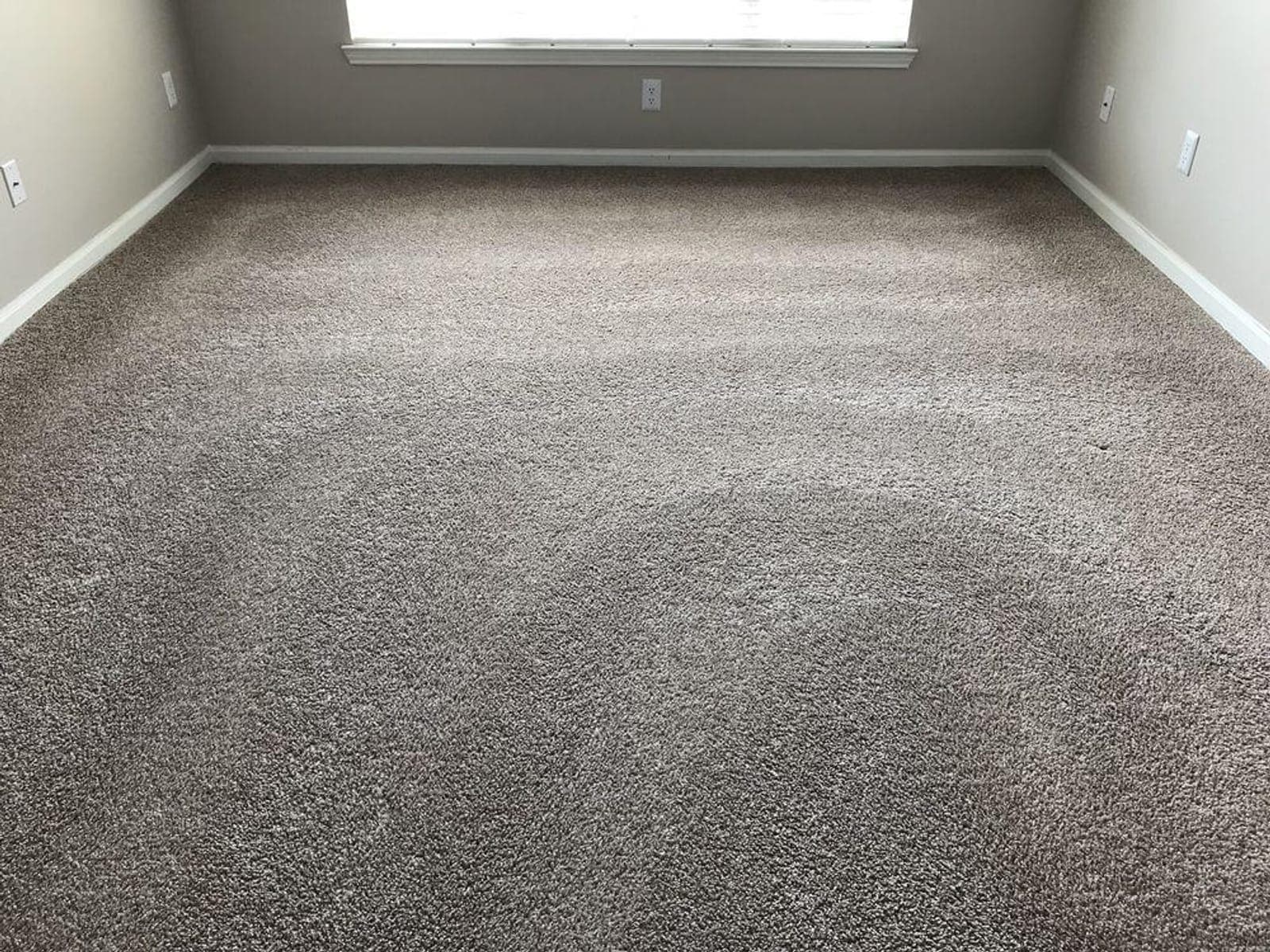
Why the basement beats the box fan
Upstairs, a couple of fans in a doorway can genuinely help a small spill, because the house cooperates: open windows, warm air, rooms that connect to other rooms. A basement offers none of that. Point fans at wet basement carpet and you push moisture into air that has nowhere to go, so it circles the room and condenses on the coolest surfaces it can find, which down there means the slab, the foundation walls, and the ductwork. You have not dried anything. You have redistributed it.
The shop-vac disappointment is sharper in a basement too. You can pull the visible water off the carpet on Saturday and feel like you won. But basement carpet usually sits directly on concrete, tacked or glued with little or no pad, and the slab under it drank for as long as the water stood. Concrete gives that water back for days, re-wetting the carpet from below. Dry Saturday, damp Tuesday, musty by the weekend, and the carpet gets blamed for what the slab did.
A basement does not dry on its own. It just waits you out.
Three ways a basement fights the dry-down
The slab is the first opponent. Concrete looks like a barrier and behaves like a very slow sponge: porous, thirsty, and patient. Standing water wicks into it in hours and comes back out over days, which means the carpet lying on it is being re-wetted long after the flood itself is history. Any dry-down plan that ignores the slab is drying the carpet against a wet counterweight.
The second opponent is the air, or the lack of movement in it. Evaporation needs airflow across the wet surface and somewhere for the vapor to end up. A below-grade room with two small windows and one stairwell has neither. Moisture leaves the carpet, saturates the still air above it, and evaporation slows toward a stop. The room reaches a damp equilibrium and holds it, which is exactly the condition that turns a wet weekend into a musty month.
The third is temperature. Basements run cool, and cool air holds less water vapor than warm air before it gives up and condenses. The same gallon that upstairs air could carry away overwhelms basement air quickly. This is why basements feel damp even without a flood, and why after one they are the last room in the house to come back on their own. On their own being the operative phrase, because with the right equipment they come back fine.
Drying a room the house will not help with
Extraction happens first and it is aimed at both layers: slow, weighted passes to pull water out of the carpet, and a full recovery of anything standing on the slab around and under it. Every gallon out by machine is water the basement air never has to carry, and basement air, as covered above, is a weak porter. Where the carpet is tacked at the edges, drying it in place over the slab is usually the right move; we settle it with meter readings when we first walk the room, not guesswork.
Then the dry-down runs backwards from the way it would upstairs: dehumidification leads and airflow supports. Machines pull moisture out of the air so the air can keep accepting what the carpet and slab release, while air movers keep both surfaces coupled to that air. We meter the carpet and the concrete against dry reference points until both read done, which in most basements means two days of equipment, sometimes three when the slab took a long soak. After the meters agree, the carpet is cleaned the way Safe-Dry cleans carpet everywhere, carbonation doing the work of soap with almost no added moisture, and the area the water reached gets sanitized before the machines roll back up the stairs. All of it is priced at the walkthrough, one firm number, before anything is switched on.
We walk through the full extract-dry-clean-sanitize sequence on our how water extraction works page, and every job is backed by our 100% satisfaction guarantee.
Frequently asked questions
Storm water came in through my basement walls. Can you dry it?
No, and we will not pretend otherwise. Groundwater and storm flooding are Category 3 contaminated water no matter how clear they look, and that carpet belongs with a restoration contractor equipped for contaminated-water work, usually as a removal job. Our lane is clean-water events in the basement: burst supply lines, water heater failures, washer hoses. If you are not sure which you have, describe it on the phone and we will tell you straight.
How long does flooded basement carpet take to dry?
With extraction, dehumidification, and air movement, most basements need two days and the slow ones need three, and we call it dry when the meters do, not when the surface feels fine. Without equipment, honestly, a basement may never fully get there. The slab keeps feeding moisture back and the room air cannot carry it out.
Should I just tear the carpet out and start over?
Sometimes that is the right answer, and when it is, it is the answer you will get. Clean water plus a same-day call usually means the carpet is saveable. Carpet that sat soaked for days, or any carpet touched by drain or ground water, is a removal, and since we neither remove carpet nor sell its replacement, there is no incentive behind the advice either way.
Related water problems we handle
Carpet water damage
The layer-by-layer story of what water does to carpet, and the clock each layer runs on.
Where the Water Came FromWater heaters
Tanks fail slow, then all at once, usually in a room nobody checks. We dry the floor and the carpet next door that wicked it up.
Hard FloorsWet subfloor
The deck under every floor covering, dried from above when extraction starts early, with a straight answer when a section is past saving.
Every hour it sits, it soaks deeper
Enter your zip code to reach your local Safe-Dry® team. Water extraction and drying for floors and carpet across 532 locations in 6 states, with same-day response in most areas.