
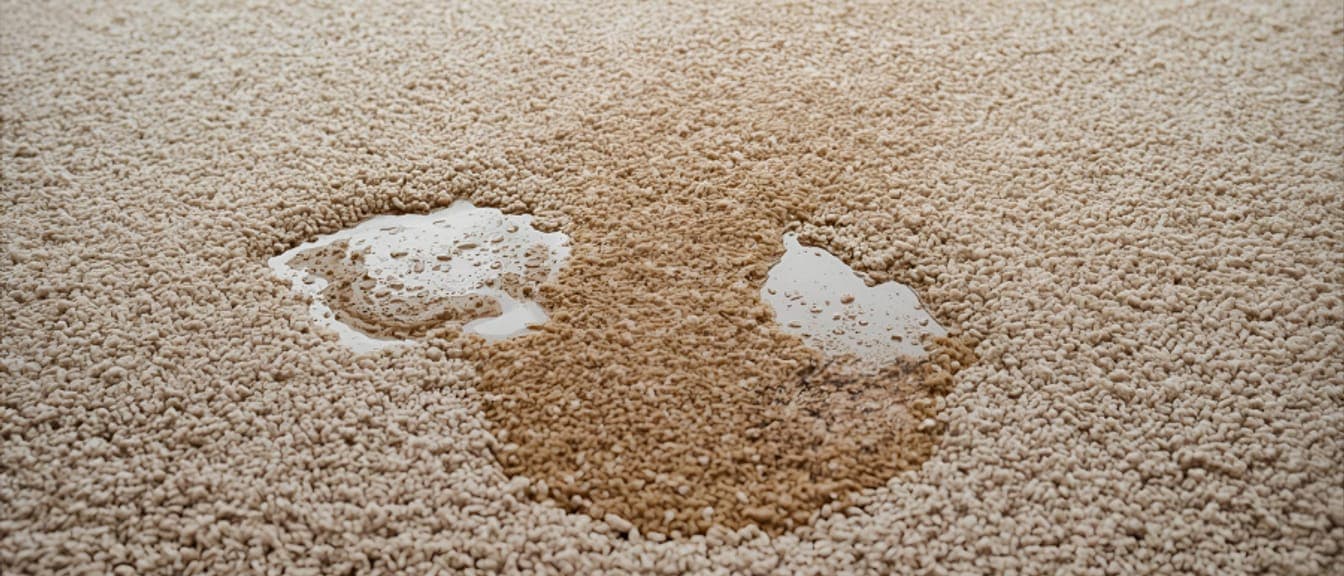
A burst supply line does not announce itself politely. One minute the house is normal, the next there is a sound like a bath running inside a wall, and water is finding every low spot in the floor. If that is roughly where you are right now, take a breath. The first hour matters more than the first week, and everything on this list can be done by one person with wet socks and no special equipment.
You are not trying to finish the job yourself, just to stop the clock where you can and hand the drying crew a better starting position. Here is the order of operations.
1. Make the water stop
Nothing else on this page matters while the pipe is still winning. If the leak is at a fixture, there is almost always a small shutoff valve within reach: behind the toilet, under the sink, behind the washing machine. Turn it clockwise until it stops. If you cannot find a local valve, or the water is coming out of a wall, go to the main shutoff, usually where the water line enters the house, near the meter, or on a basement or garage wall facing the street.
A pressurized supply line moves several gallons a minute, which is why five minutes of hunting for the valve is worth more than an hour of toweling. There is more on what pressurized lines do to a floor on our burst pipe water damage page. If you cannot make the water stop at all, a plumber is the first call and the drying crew is the second.
2. Think about electricity before you wade in
Look at where the water is heading before you step into it. If it has reached outlets, power strips, floor lamps, or any cord lying on the floor, go to the breaker panel and kill the circuit for that room. If you are not sure which breaker it is, flip the ones that might be and live with a dark room. This is the one step on the list where being wrong has consequences that a drying crew cannot fix.
3. Ask what kind of water this is
Everything in this playbook assumes clean water: a supply line, a water heater, a washer hose, a tub or sink that overflowed. That is the kind of event Safe-Dry handles, and it is safe for you to work around with bare hands.
If the water came up out of a toilet, backed up through a floor drain, or came in from outside, stop. That water is contaminated, it gets worse the longer it sits, and it calls for a restoration contractor with containment gear, which is a different trade from ours. We will tell you the same thing on the phone. Do not towel it up barehanded and do not run a household vacuum through it.
4. Get things off the wet floor
Water damage to the floor is one problem. Water damage to everything sitting on the floor is a second, avoidable one. Work through the room:
- Furniture legs go up on aluminum foil, plastic lids, or blocks. Yes, foil. It looks ridiculous and it works. Stained wood legs bleed dye into wet carpet within hours, and those marks survive the dry-down.
- Area rugs come off wet carpet and wet hard floors entirely. Rug dyes are the worst offenders in the room.
- Boxes, books, and cords move to dry ground. Cardboard wicks water upward faster than you would guess.
- Skirted furniture gets checked underneath. Fabric skirts sit in puddles quietly.
5. Go after the puddle you can see
Towels, a mop, or a wet-dry vacuum on the standing water are all worth your time. Every cup you pick up now is a cup that does not soak into the pad while you wait. Just hold on to one piece of perspective: the puddle is the minority of the water. Most of what the floor took is already below the surface, and getting it back out is machine work. That is the job same-day water extraction exists to do.
Three panic moves that make it worse
Some first-hour instincts feel productive and quietly cost you. The three we see most:
Turning on the ceiling fan and calling it handled. Moving air dries the surface fibers, and only the surface. The carpet feels better by evening while the pad underneath stays saturated, which is exactly the trap covered in our guide to wet carpet drying. A fan is fine to run. It is not a reason to cancel the call.
Ripping up the carpet in a panic. Wet carpet is heavy, its backing is soft, and it tears at seams when yanked. Carpet pulled up wet by hand often never lies flat again. Whether the carpet gets lifted, and whether the pad under it is worth keeping, is a decision to make with a moisture meter, not with adrenaline. Give a crew the chance to make it while there is still something to decide.
Aiming a space heater at the floor. Heat without airflow and dehumidification does not dry a room, it humidifies one. It can also cook the latex in the carpet backing and crown wood planks, and a portable heater next to standing water is its own safety problem. Unplug it.
Then make the call
Once the water is stopped, the power question is settled, and the floor is cleared, the useful part of DIY is over. What remains is in the pad and the subfloor, on a clock measured in hours, and it comes out with extraction equipment, air movement, and dehumidification. Find your nearest crew through the Safe-Dry location finder or call 1-800-SAFE-DRY, describe the source and how long the water has been down, and you will get a straight answer about whether this is our kind of job. If it is, you will know the full price at the walkthrough, before anyone starts working.