
When an Area Rug Gets Soaked
A wet rug is really two problems stacked on top of each other: the rug, and the floor it is now holding water against. The order of operations matters, and it starts with lifting the rug.
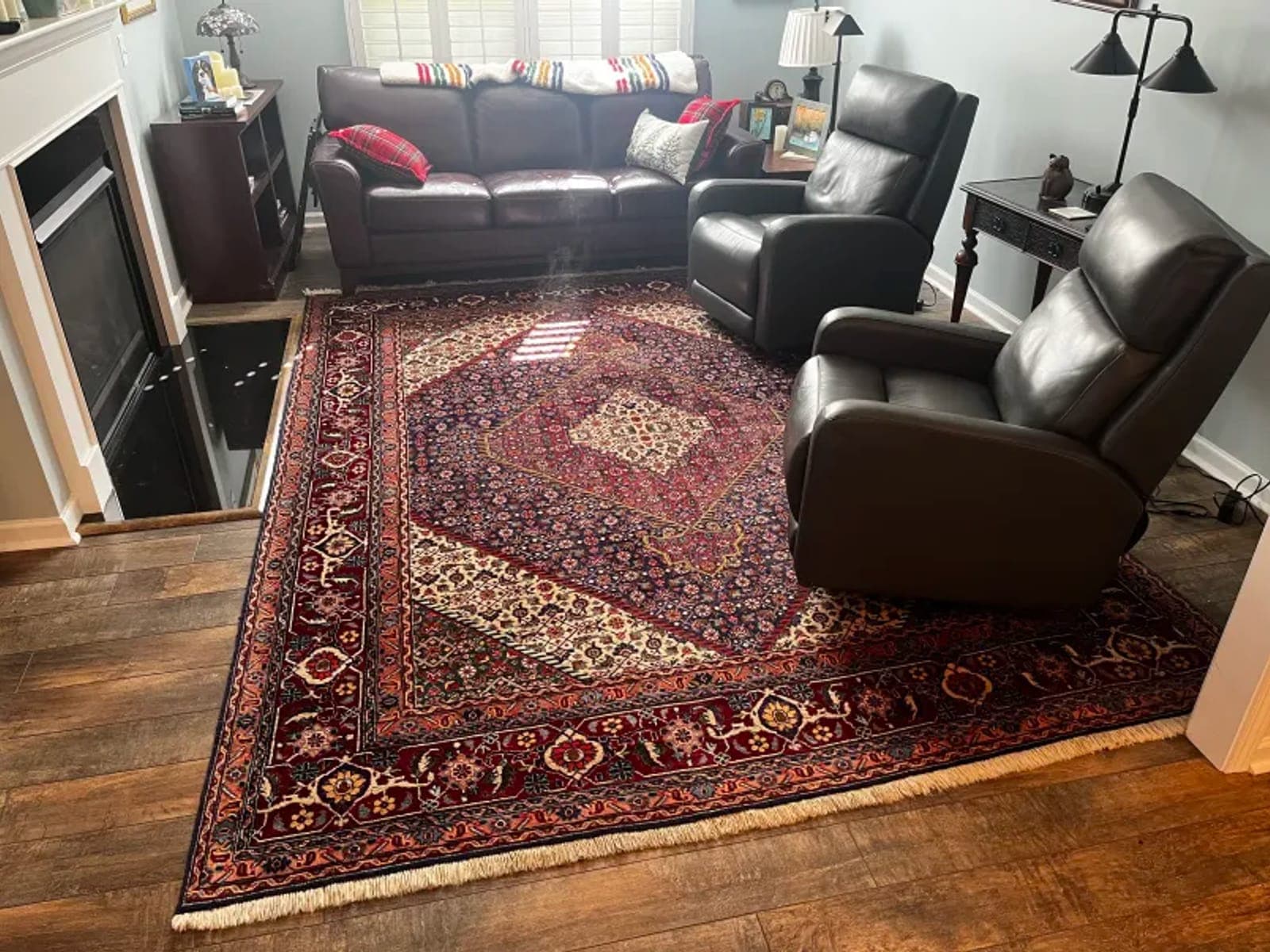
Leaving the rug down while it dries
The natural move is to aim a fan at the wet rug and let it dry where it lies, and it is the single most expensive mistake available in this situation. A rug drying in place dries from its top face only, while its underside stays pressed against a floor that now cannot release moisture in any direction. The fan makes the surface feel better by the hour, and under the rug, the hardwood or laminate is spending that same hour soaking. People routinely save the rug this way and lose the floor it was decorating.
The second trap is running a wet-dry vacuum over the top of the rug and calling the job finished. The pass recovers surface water, which is worth doing, but a soaked rug holds most of its load in the foundation yarns and backing, and there is usually a film of water sitting in the gap between rug and floor that no top-side pass touches. Meanwhile every hour the rug stays down wet is an hour its dyes are mobile. Reds and blues migrate in damp rugs, and a dye bleed that transfers into the pattern, the fringe, or a light floor finish does not come back out.
Two faces, and neither one can breathe
A rug lying on carpet after a spill is a problem; a rug lying on a hard floor is a trap. Hard flooring sheds water sideways until something stops it, and a rug is a very good something: it absorbs the spread, holds it, and then presses it back against the floor like a poultice. The floor cannot evaporate upward through the rug, the rug cannot drain downward through the floor, and the water sits in the sandwich working on both. It is common for the worst floor damage in the room to be a rug-shaped patch that looked protected.
The rug has its own clocks running too. Water in the foundation softens the sizing that keeps a rug flat, so a rug dried badly can come back rippled. Wet dyes wander, wet cotton fringe browns, and a rug with a latex-backed construction faces the same adhesive deadline wall-to-wall carpet does. None of these clocks can be read from the top face, which is the only face anyone looks at, and all of them slow dramatically the moment the rug comes up off the floor and air reaches both sides.
Rug up, floor dried, room sanitized
Step one is separation. The rug comes up off the floor, rolled and moved somewhere it can sit up off the ground with air on both faces, which stops the dye migration clock and uncovers the real patient. If you have already done this before we arrive, you have done the most valuable ten minutes of work the situation offered.
Then we treat the floor like the water event it just had. Extraction pulls what is standing and what soaked into carpet under or around the rug's footprint, and hard flooring gets metered for the moisture the rug pressed into it, because a rug-shaped damp zone in hardwood is invisible from above and very real underneath. Air movement and dehumidification carry the floor to verified dry, which for most rooms means about two days of equipment, checked against readings from an area the rug never covered.
Once everything reads dry, the room gets handed back finished: hard flooring cleaned, any carpet in the footprint given the carbonated Safe-Dry clean that skips the soap and barely dampens the pile, and a sanitizing pass over the area the water touched. Our scope is the floor and the carpet: the rug itself, once it has dried out, deserves a proper cleaning of its own, and that work belongs with the rug specialists linked below. The price for the floor work is settled at the walkthrough and does not drift.
We walk through the full extract-dry-clean-sanitize sequence on our how water extraction works page, and every job is backed by our 100% satisfaction guarantee.
What to do before the crew arrives
The first minutes belong to you, and they matter. Here is the honest version of what actually helps, and the point where waiting for equipment beats improvising.
- 1
Lift the rug now
Roll it loosely, carry it flat if two people are available, and get it somewhere it can lie or hang with air on both sides: garage, patio, over sawhorses. Every hour it stays down, it is pressing water into the floor and its dyes are deciding whether to travel.
- 2
Dry the floor where it sat
Start with towels, and follow with a shop vacuum on a slow pass if there is one in the garage. You are chasing the film of water that lived between rug and floor, so work the whole footprint, including the part that still looks fine.
- 3
Inspect the footprint and keep air on it
Look across the floor at a low angle in the light. Haze, dull patches, or edges starting to lift in a rug-shaped zone mean the floor took real moisture and needs metering, not hope. A fan across the area helps while you make the call.
Frequently asked questions
Can a soaked area rug be saved?
Usually, if it comes up fast. A rug lifted the same day and dried with air on both faces typically comes through, while the risks, dye bleed, browning fringe, rippling, all grow with hours spent lying wet. Get it up first and sort out everything else second.
Do you clean the rug itself?
No, and that is a scope line we keep on purpose. We extract, dry, clean, and sanitize the floor and any carpet the water reached, including everything under the rug's footprint. The rug, once dry, is a job for a dedicated rug cleaning crew, and we will point you to our sister specialists for it below.
The floor under the rug looks fine. Is it?
Looking fine from a standing position is the least reliable report a wet floor gives. The rug pressed water against that spot for as long as it lay there, and hardwood and laminate both take on moisture invisibly before they cup or swell. We meter the footprint against a never-covered area, and the meter settles it either way.
Related water problems we handle
Hardwood floors
Cupped boards can still settle if the dry-down starts early enough; we extract, equalize, and say plainly which boards won't come back.
Carpet Water DamageCarpet water damage
The layer-by-layer story of what water does to carpet, and the clock each layer runs on.
Extraction & DryingWater extraction
Standing water out the same day, because the difference between hours and days is the difference between drying and replacing.
Every hour it sits, it soaks deeper
Enter your zip code to reach your local Safe-Dry® team. Water extraction and drying for floors and carpet across 532 locations in 6 states, with same-day response in most areas.